
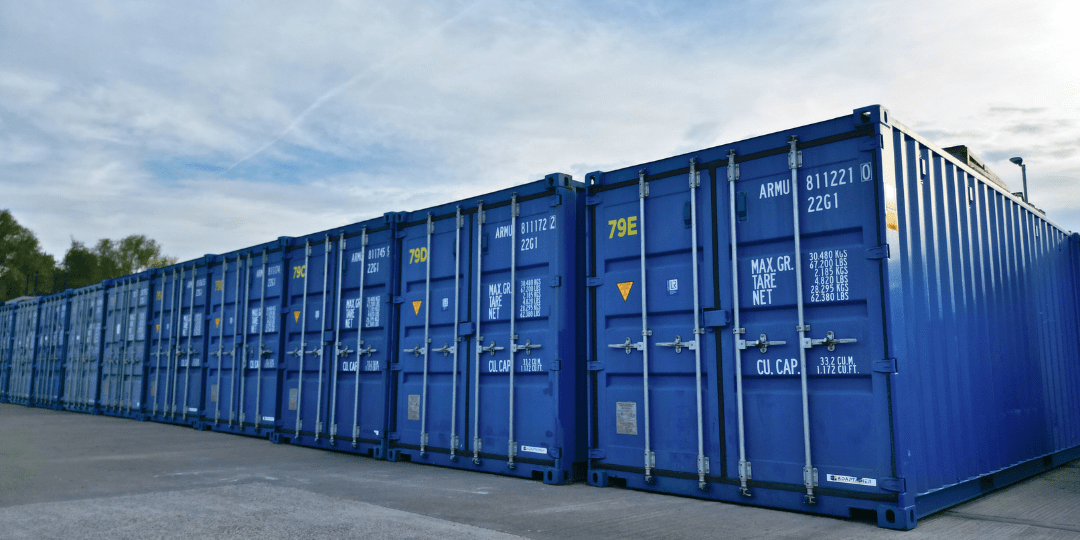
Tool Storage For Tradespeople In Bury And Manchester
The best local option for storing tools, stock and van overflow is a drive up self storage unit, not a van left on the street or a shared lock up garage. Meadow Self Storage gives tradespeople in Bury, Failsworth and across Manchester ground floor units from 5ft to 40ft, with 24 hour CCTV and 24 hour manned security, so tools sit somewhere far harder to target than an unattended van overnight.
What Tradesperson Tool Storage Really Means (And Where Vans And Lock Ups Fall Short)
Ask most electricians, plumbers, builders or joiners where their tools live and the honest answer is usually the van, topped up by whatever corner of a garage or spare room has not already been taken over by stock. That works fine for the first few years of self employment. It stops working once enough kit has accumulated over a decade of jobs that the van is permanently rammed and half of what you own never gets used because you cannot find it.
Tradesperson tool storage, as this article means it, is a dedicated space that sits between the van and the workshop most solo trades never get round to renting, a secure, accessible base where tools not in daily use, bulk materials bought at a discount, and genuine van overflow can sit without cluttering the vehicle you drive every day.
The van itself is a poor long term store for two reasons. It sits in the most targeted category of vehicle theft for UK trades, often parked in the same spot every night, exactly the pattern opportunist thieves look for, and a van crammed with stock is less efficient to work from, since every job starts with digging through gear that has nothing to do with today’s task.
A lock up garage solves some of this but brings its own problems. Availability is patchy, with waiting lists common for council owned lock ups around Greater Manchester, and security is entirely down to whatever door and lock you fit yourself, with no CCTV and nobody around if something goes wrong. Many are also older buildings with damp or uneven floors, which matters when storing boarding flat and dry.
How A Drive Up Tool Storage Unit Works As Your Daily Trade Base
The mechanism is straightforward and it makes a real difference day to day. A ground floor unit with drive up access means you bring the van right up to your own door, rather than carrying everything through a shared corridor or lift, the norm at multi storey indoor storage built mainly for household boxes.
A builder can reverse a loaded van up to the unit and move boarding or a cement mixer straight in without lifting anything further than the width of the pavement. A roofer can slide ladders and scaffold boards directly into the van without folding them round a corner. An electrician or plumber can keep tool chests on shelving and simply load the day’s job kit each morning.
Because the unit sits on a site with 24 hour CCTV and 24 hour manned security, rather than being a van parked unattended overnight, the risk profile changes. Tools no longer sit in a vehicle on a residential street unwatched for eight or ten hours, only the day’s essentials go back into the van each morning. That single change, storing the bulk of your kit off the vehicle, is the practical core of tradesperson tool storage.
To find the right branch and unit size for how you work, the quickest route is to get a quote from Meadow Self Storage and talk through your van size and trade, since a joiner’s stock and a landscaper’s equipment need very different shapes of space at the same square footage.
Tool Theft And Van Break Ins: The Real UK Numbers Behind Trade Storage
It is worth being precise here rather than repeating vague headline figures recycled across trade forums. The Office for National Statistics Crime Survey for England and Wales for the year ending June 2025 recorded around 649,000 incidents of vehicle related theft, down 13 percent from roughly 747,000 the previous year, while separately recorded police data showed vehicle offences falling 12 percent to 334,489. That downward trend is encouraging, but it still means theft runs into the hundreds of thousands of incidents a year, and vans carrying visible tools remain a disproportionately attractive target, since the contents are worth more and resell faster than most items taken from a car.
That pattern is reflected in the National Business Crime Centre’s tool theft crime prevention guidance, which cites research from insurer Direct Line finding that tools are stolen from a tradesperson’s van on average every 20 minutes somewhere in the UK. Whatever the precise current figure, the direction from every serious source is the same: van break ins targeting tools are frequent, largely opportunistic, and concentrate on vehicles parked in the same predictable spot night after night with tool boxes visible inside.
The Federation of Master Builders has published similar advice to its members for years, and the consistent theme is that the single biggest risk factor is leaving a full set of tools inside an unattended vehicle overnight in a predictable location. Greater Manchester Police’s vehicle security advice reinforces the same point locally, recommending valuables are removed from view, external toolboxes are padlocked, and vehicles are parked in well lit, well used areas rather than isolated ones. The safest place for the bulk of your tools overnight is not the van at all, it is a unit on a staffed, monitored site, with only tomorrow’s job kit loaded the evening before or the morning of.
Unit Sizes Explained: Matching Tool Storage Capacity To Your Trade
Meadow Self Storage offers four unit sizes, 5ft, 10ft, 20ft and 40ft, and the right one depends far more on what you carry than the size of van you drive. Two tradespeople with identical Transit vans can need different unit sizes depending on whether their stock is small and dense, like electrical fittings, or bulky and light, like insulation board.
A 5ft unit suits a solo tradesperson whose main need is somewhere secure for a couple of tool chests, a small stock of consumables and maybe a ladder, fitting a handyman, locksmith or solo electrician who mainly wants somewhere safe for specialist tools and fittings bought in bulk. A 10ft unit is the size most solo tradespeople and small two person teams settle on, comfortably holding several tool chests, a full ladder set, power tool cases and a modest stock of materials, with room to walk around and load the van.
A 20ft unit steps up to bulk materials, where a builder, contractor or joiner running a Transit or Luton sized van tends to land, with room for pallets of bagged materials, sheet goods stored flat, a small cement mixer and several ladders and trestles. It also suits a landscaper storing strimmers, a mower and bagged aggregates between contracts. A 40ft unit is aimed at larger operations, multi van businesses, or trades whose stock genuinely needs the space, such as scaffolders or a builder running two or three vans off one base, with room for a scaffold tower, multiple ladder sets and several pallets of materials.
Trade Storage Suitability Matrix: Which Unit Size Fits Your Van And Trade
The table below is a starting point rather than a fixed rule, since stock levels vary job to job, but it reflects what tends to work in practice for common trades operating around Bury, Failsworth and the wider Manchester area.
| Trade or van size | Recommended unit | Why this size works |
|---|---|---|
| Solo handyman or small van trade, light stock | 5ft | Enough for tool chests, a ladder and a small stock of consumables, kept secure and separate from the van |
| Electrician or plumber, Transit Connect or similar | 10ft | Fits multiple tool chests, test equipment, a full ladder set and boxed fittings with room to move |
| Builder, joiner or decorator, standard Transit | 10ft to 20ft | Handles both tools and bulkier stock such as sheet goods, boxed units or paint, depending on job volume |
| Landscaper or groundworker | 20ft | Space for petrol equipment, bagged aggregates, turf tools and larger machinery such as a mower |
| Roofer or scaffolder | 20ft to 40ft | Long items like ladders, scaffold boards and sheet materials need floor length and drive up access |
| Multi van small trade business | 40ft | Room to store several vans worth of kit and materials as one organised base rather than several small units |
If you sit between two sizes, the sensible move is to speak to the branch team when you get a quote, since they see this question from tradespeople every week.
Electricians And Plumbers: Tool Storage For Compact, High Value Kit
Electricians and plumbers share a particular storage problem, their tools are compact but individually expensive, and their vans also carry a rotating stock of fittings, cable and pipe that eats space fast. A single set of testing equipment and a decent cordless kit can represent several thousand pounds, all small enough to fit in a rucksack, which is exactly what thieves target because it is quick to grab and easy to resell.
A 10ft unit gives most electricians and plumbers room for a deeper stock of fittings bought at trade price, storage for specialist tools not needed on every job, such as a pipe threading machine, and a place to rotate stock as jobs demand. Loading the van each morning with exactly what that day’s jobs need, then returning anything unused at the end of the day, keeps the vehicle itself a far less attractive target sitting outside a house overnight.
Builders And Landscapers: Trade Storage For Bulk Materials And Heavy Equipment
Builders and landscapers face the opposite problem to electricians, their tools are worth less individually, but the volume of material they need to move is far greater. A 20ft unit with drive up access solves a pain point indoor, upstairs storage cannot, reversing the van up to the door and moving heavy items in a straight line rather than through a building.
For a builder, that means storing part loads of bricks left over from a job, sheet materials kept flat and dry, and power tools like breakers and mixers between contracts. For a landscaper, it usually means petrol equipment such as strimmers and mowers, and seasonal kit that is only needed for part of the year but takes up disproportionate space the rest of it.
HSE guidance on materials storage on site makes the point that a designated, organised storage area reduces both the injury risk of trips from poorly stacked materials and the time wasted hunting for things, and the same logic applies just as well to a trade storage unit as a construction site compound.
Joiners And Decorators: Tool Storage For Stock, Timber And Finishing Materials
Joiners and decorators sit between the other two profiles, carrying valuable power tools alongside bulk stock that needs to stay dry and, for timber, kept flat and off a damp floor. A joiner working from a van alone often ends up wedging part sheets of ply or MDF wherever they fit, which damages the material and makes the van harder to load safely.
A 10ft to 20ft unit gives a joiner room to rack timber properly and keep power tools secure between jobs, rather than carrying the full kit to every site regardless of need. Decorators benefit for a different reason, paint, wallpaper stock, dust sheets and trestles all take up space that is awkward in a van but easy in a unit with shelving. Both trades also benefit from drive up access for the least glamorous part of the job, loading flattened boxes and timber offcuts straight into the van at ground level.
Multi Van Trade Businesses: Tool Storage As A Shared Base
Once a trade business grows past one van, tool storage stops being a personal convenience and becomes an operational question. Where do new starters collect kit each morning, how is shared equipment like a cement mixer tracked between jobs, and where does stock bought in bulk for several contracts actually live.
A 20ft or 40ft unit used as a central base solves this cleanly. Vans load up from the same site each morning, shared equipment has one home rather than living in whichever van used it last, and bulk materials are stored properly instead of split awkwardly between vehicles. Some businesses use the unit as the meeting point for the working day, which also makes it easier for the owner to keep an eye on tool condition and stock without chasing employees individually. A shared base also tends to work out more cost effective than each subcontractor arranging separate storage, since one well organised 40ft unit usually costs less than several smaller units scattered across different providers.
Who This Tool Storage Approach Isn’t For
It would be dishonest to present this as the right answer for every situation. If your work genuinely requires leaving a fully loaded van parked on an active site overnight, for example a commercial job where the van needs to be on site at 6am with plant already loaded, a storage unit some distance away does not solve that problem, and you will still need your own site security for that vehicle.
It is also not the right fit if you need round the clock, unaccompanied access outside staffed hours as a routine part of how you work. Access at Meadow Self Storage is during staffed opening hours at each branch, which suits most trades, but if your pattern involves collecting tools at unusual hours on a recurring basis, call the branch to check current hours first. And it is not a substitute for a workshop if your trade needs power tools running on site or a bench to build something, since a storage unit is for keeping tools, stock and van overflow secure, not for working inside as a fabrication space.
Security Features That Matter For Tool Storage
Not all security claims are equal, and it is worth being specific about what actually reduces theft risk rather than what merely sounds reassuring. Both Meadow Self Storage branches run 24 hour CCTV and 24 hour manned security, and the combination matters more than either alone. Cameras record evidence after the fact, but a manned presence changes behaviour before an incident happens, since opportunist thieves look for unattended, unmonitored sites, a description that fits an empty industrial estate at night far better than a staffed storage site.
Ground floor units with individual drive up access are a security feature in their own right, not just a convenience. A unit you can see directly from your van as you pull up is easier to check at a glance and harder for someone to loiter near unnoticed.
On top of site level security, advice from Greater Manchester Police and the National Business Crime Centre both point to the same individual habits making a real difference: mark tools with your name or company details, keep a record of serial numbers for anything valuable, and use a solid close shackle padlock rather than a basic one. None of this replaces the site security, but stacked layers of protection deter opportunist theft far better than any single measure alone.
Using Your Unit As A Daily Loading Base For Tool Storage
The tradespeople who get the most out of a storage unit treat it as a working part of their day rather than somewhere things go to be forgotten. Keep the tools and materials you use most often near the front and at a height you can reach without moving other things, and push seasonal items to the back. A simple system, even just labelled boxes or a couple of sets of shelving, saves far more time over a year than it costs to set up.
Group by job type rather than tool type where possible. An electrician might keep a first fix box, a second fix box and a testing kit as three distinct groups, so a morning job only needs one box loaded. A builder might group materials by the contract they are earmarked for, so a delivery does not get mixed into general stock.
Make loading and unloading part of a routine rather than an afterthought. Loading the van the evening before an early start avoids a rushed morning, and returning unused tools to the unit at the end of the day keeps both vehicle and unit working as intended. Drive up access earns its keep here, since a five minute job of swapping kit only stays a five minute job if you are not also negotiating stairs or a long walk from a parking bay. HSE guidance on manual handling is relevant too, since a disorganised unit tends to lead to awkward lifts, an avoidable risk that a tidy, well planned unit removes.
Tool Storage Costs And Whether They Are Tax Deductible
Cost is understandably the first question most tradespeople ask, and the honest answer depends on unit size, branch and current availability, so the most accurate figure comes from requesting a quote directly from Meadow Self Storage rather than a generic number quoted elsewhere.
Against a lock up garage, a storage unit often costs more on a simple price comparison, but that misses what is bundled into the price. A lock up typically has no CCTV, no staffed presence, and you are usually responsible for the building’s condition. Once you account for the cost of adding your own alarm and decent locks, the gap narrows, and for anyone storing several thousand pounds of tools the calculation tends to favour the storage unit once risk is weighed rather than just monthly price. Against keeping tools in the van overnight, there is no like for like cost at all, since losing a van’s worth of tools to theft, in replacement cost and lost working days, routinely runs into thousands of pounds for a single incident, consistent with the theft data covered earlier.
On tax treatment, gov.uk guidance on allowable expenses for self employed people lists rent for business premises and associated security costs among the standard categories of allowable business expense. A storage unit rented specifically to keep business tools and stock fits that same category. Keep your invoices, be able to show the unit is used for the trade, and confirm the correct treatment with an accountant or HMRC if your circumstances are unusual.
Common Tool Storage Mistakes Tradespeople Make
A handful of mistakes come up repeatedly among tradespeople managing tool and stock storage. The first is treating the van as permanent storage rather than a working vehicle, so tools accumulate for months until the van is effectively a mobile storage unit with none of the security of an actual one. Move anything not needed for the current week’s work into proper storage instead. The second is under sizing the unit to save a small amount each month, then ending up with everything piled in front of everything else, wasting time on every visit and risking damage to stock stored badly. It is usually cheaper over a year to take the next size up than to lose hours hunting through a crammed unit every week.
The third is failing to mark or record tools, so that if something does go missing there is no serial number or photograph to help identify it or support an insurance claim, something worth sorting the same week you move tools into storage. The fourth is storing materials in ways that damage them, sheet goods leaned rather than laid flat and prone to warping, or stock with no logical grouping so finding anything means moving everything else first, exactly the kind of disorganised storage HSE guidance on site materials warns creates real injury risk.
The fifth mistake is not reviewing what is actually in the unit periodically. Stock bought for a job that never happened, tools replaced but never cleared out, and offcuts kept just in case all build up over time and eat the space that should be working for you. A rough clear out every few months keeps the unit doing its job rather than becoming a general dumping ground.
Tool Storage For Tradespeople: The Honest Verdict
For most solo tradespeople and small trade businesses working around Bury, Failsworth and Manchester, moving the bulk of tools, stock and van overflow into a dedicated storage unit is a genuinely sensible operational decision, not just a nice to have. It reduces the single biggest theft risk trades face, a van parked overnight with tools visible inside, makes daily loading faster through drive up access, and gives growing businesses a shared base that scales more sensibly than everyone arranging their own solution.
It is not the right answer for every scenario, particularly trades needing a fully loaded van on an active site overnight or genuine access outside staffed hours, and it is not a substitute for a workshop if your trade needs bench space to build things. But for the ordinary daily pattern most electricians, plumbers, builders, joiners, decorators, roofers and landscapers work to, a secure unit at either the Manchester branch in Failsworth or the Bury branch solves a problem that a van alone, or a self secured lock up garage, genuinely cannot match on security or convenience at a comparable cost.
To work out which size and branch suits how your trade runs, the most useful next step is to get a quote from Meadow Self Storage, or to contact the team directly with a description of your van, your stock and how you like to work.
Tool Storage For Tradespeople: Frequently Asked Questions
1. What is the best tool storage option for a tradesperson working around Bury or Manchester?
For most tradespeople around Bury, Failsworth and Manchester, a drive up self storage unit is the most practical option, giving a secure base to keep tools, stock and van overflow between jobs with ground floor access. Meadow Self Storage has branches in Failsworth and Bury, both offering 24 hour CCTV and 24 hour manned security.
2. How much does tool storage cost compared to a lock up garage?
A lock up garage is often cheaper on paper, but that comparison rarely accounts for security. Lock ups vary hugely in price, are often on a waiting list, and security depends entirely on whatever locks you fit yourself. A self storage unit bundles CCTV and staffed security into the price, so request a quote from Meadow Self Storage to compare properly.
3. Can I access my trade storage unit early in the morning before a job?
Access is during staffed opening hours at both the Failsworth and Bury branches, which suits most trades who load up early before heading to site. If your work regularly starts before the branch opens or finishes very late, call ahead to confirm current opening hours, since these are set locally and can vary.
4. What size tool storage unit do I need for a transit sized van?
A 10ft unit is usually enough for a solo tradesperson running a small to medium van, holding power tools, tool chests, ladders and a modest stock of materials. A Transit carrying bulkier stock tends to need a 20ft unit, while a 40ft unit suits multi van businesses or trades storing large items such as scaffold towers.
5. Is tool storage in Bury and Manchester secure enough for expensive power tools?
Both Meadow Self Storage branches run 24 hour CCTV and 24 hour manned security, a meaningfully different risk profile to a van parked on a street overnight. Tool theft from vans is opportunistic and fast, and an unattended vehicle is a far easier target than a unit on a monitored, staffed site.
6. Can I store flammable materials or gas bottles in a tool storage unit?
No. Self storage units are not designed or licensed for flammable liquids, gas cylinders or similar hazardous substances, and HSE guidance on site storage is clear that flammable materials need dedicated, ventilated storage kept apart. Petrol, gas bottles and solvents should stay with your normal site arrangements. If unsure, ask Meadow Self Storage directly.
7. Is the cost of a tool storage unit tax deductible for a self employed tradesperson?
For most self employed tradespeople, rent paid for a unit used to keep business tools and stock counts as a business premises cost, which gov.uk lists as an allowable expense alongside rent, rates and security costs. Keep your invoices, be able to show the unit is used for the trade, and check with an accountant or HMRC if your situation is more complicated.
8. Can two or three tradespeople share one tool storage unit?
Yes, this is common among small trade businesses and subcontractors who work together, particularly in a 20ft or 40ft unit with enough floor space for each person to have their own marked area. It works best when everyone agrees who is responsible for which tools. Talk to Meadow Self Storage about the right size before committing.
9. What happens if I need to load a long ladder or scaffold boards into tool storage?
This is exactly what ground floor, drive up units are designed for. Because you pull the van directly up to your unit rather than carrying items through a lift or up stairs, long items such as ladders and scaffold boards are far easier to load than in a multi storey indoor facility. HSE manual handling guidance still highlights the injury risk from carrying long loads awkwardly, so plan your route in and out first.
10. Do I need my own padlock for a trade storage unit?
Yes, you are responsible for locking your own unit, and a solid, close shackle padlock is worth the small extra cost over a basic one, since it is far harder to attack with bolt croppers. This sits on top of the site level security Meadow Self Storage provides, giving two layers of protection rather than relying on either alone.
Meadow Self Storage also supports business customers with wider storage needs beyond tools and trade stock. If you run a business alongside your trade work, it is worth looking at the dedicated business storage in Bury page, or learning more about Meadow Self Storage and how the Bury and Failsworth branches operate before you decide which one suits your daily route best.