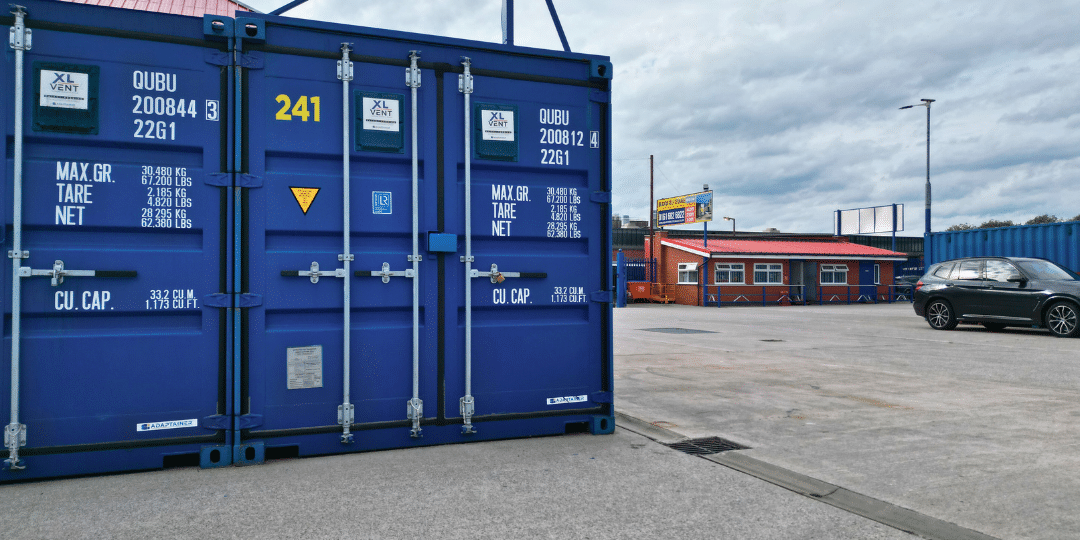
Storage for Allotment Holders and Keen Gardeners in Bury and Manchester
Storage for Allotment Holders: Answer First
Storage for allotment holders usually comes down to one simple problem: too much kit, not enough shed. A storage unit gives you a dry, secure place to put the mower and the greenhouse overflow away for winter. You get a unit sized to what you actually own, with a door you can drive straight up to, so loading it is never a struggle.
Late October and November is when this gets urgent. Picture a typical Bury or Failsworth plot right now. The mower has done its last cut. The greenhouse needs clearing before the first frost. The shed is already packed with last winter’s leftovers that never made it back out. That is clearing a shed for winter in a nutshell, and it happens on allotments across Greater Manchester every single autumn. We cover the wider picture in our full guide to seasonal storage in Bury and Manchester. It also looks at Christmas decorations and camping gear. This post goes narrower. It covers what an allotment holder or a keen home gardener actually needs to store, and how to do it properly, from mowers and tools through to a full greenhouse clear out.
A full shed clear out rarely happens in one go. Most people start with the mower, move on to pots and trays, then find the greenhouse needs doing too. By the time everything is out on the lawn, it is obvious why the shed felt impossible to close back in September.
Winter Storage for Garden Equipment: What to Put Away Before the First Frost
Most plot holders are storing the same handful of things every autumn. None of it is worth much in money terms. All of it is awkward to keep dry and secure at home once the growing season stops.
- The mower, strimmer or brushcutter, once the last cut of the year is done
- Pots, trays and seed modules cleared from beds and borders
- Canes, netting, fleece and plant supports taken down for winter
- A wheelbarrow, trailer or bulky hand tools that will not fit in a garage
- Greenhouse staging, shelving and anything taken out before the glazing gets a clean
- Water butts, hosepipes and irrigation kit, drained and coiled for the cold months
- Grow bags, old canvas and anything else that has done its job for the season
Getting this into a unit now, instead of leaving it in a damp shed, is what keeps it usable come spring. Tools left out rust. Pots left outside crack when the water inside them freezes. A ground floor unit, with the door shut on all of it until March, solves both problems at once. Much of this also matches general advice from the National Allotment Society, which plot holders around the country already follow every autumn. None of it needs doing in one single afternoon either. Many allotment holders tackle it in stages across a few weekends, moving the mower one trip and the greenhouse kit the next. That is far easier with a unit you can get back into whenever you need it.
Where to Store a Lawn Mower Over Winter for an Easy Start in Spring
Yes, you can store a lawn mower in a self storage unit. Petrol or electric, it makes little difference, as long as it is dealt with properly first. The one thing worth avoiding is wheeling a mower in with fuel still sloshing in the tank.
- Run the mower until the tank is empty, or remove the fuel safely
- Clean grass and soil off the blades and the underside
- Check, and charge if needed, the battery on a cordless mower
- Give exposed metal a light coat of oil, then cover the mower loosely so air can still reach it
The Health and Safety Executive’s guidance on storing and using petrol safely is worth reading before any petrol mower or strimmer goes away for winter. In plain terms, it explains why fuel vapour matters more than people think. Vapour building up in an enclosed space is the real danger. A spilt drop of petrol on the floor matters far less. Containers should stay sealed. Fuel should never sit in equipment or loose cans for months on end. We ask the same of anyone storing petrol powered garden equipment with us.
Think of a mower you sit on and ride, rather than push. It is too wide for most garden sheds and too heavy to lift over a step. A full size petrol mower is one example. A trailer is another. Because our units sit on the ground floor, with the door opening straight onto the parking area, you push or drive it straight in. Nothing gets lifted. Nothing gets dropped on the way.
A ride on mower bought for a bigger plot is a common reason people first look at storage at all. It simply outgrows the plot shed the week it arrives, long before winter comes anywhere near. Rather than leaving it under a tarpaulin at the edge of the plot, where damp and frost both get to it, a unit keeps it dry and locked, ready to use again come spring.
Garden Jobs Worth Finishing Before the Mower Goes Into Storage
A lot of gardeners put the mower away too early, then drag it back out a fortnight later for one more job. Finishing a few jobs first saves that extra trip.
- Dethatching, or raking out the dead grass and moss built up over summer, so the lawn breathes over winter
- Giving the lawn one last cut on a slightly higher setting than usual, rather than scalping it before the frosts
- Clearing leaves and debris from greenhouse gutters and cold frame lids before they get wrapped and stored
- Giving borders and raised beds a final tidy, so canes, netting and plant supports can come down in one go
Once those jobs are done, the mower and the rest of the tools genuinely have nothing left to do until spring. That is the point at which it is worth getting it all into a unit, rather than leaving half a job’s worth of tools propped against the shed door.
Self Storage for Gardening Tools: Which Unit Size Fits a Shed’s Worth of Kit
We offer four unit sizes, running from 5ft up to 40ft. For most allotment holders, the choice comes down to how much of the shed is actually being cleared, not how much space sounds impressive on paper.
| Unit size | What it typically fits |
|---|---|
| 5ft | A push mower, hand tools and a few boxes of pots and canes |
| 10ft | A full shed clear out, with a mower, a strimmer, pots, trays and greenhouse kit together |
| 20ft | A ride on mower, a trailer, or two gardeners sharing one unit |
| 40ft | A full plot clearance, with machinery and furniture stored together |
Picture a gardener with a petrol mower and a strimmer. Add a dozen pots and two trays of overwintering cuttings, and that is a realistic 10ft load. Add a second mower, a trailer or a run of greenhouse staging, and 20ft starts to make more sense. The jump in size matters far less than getting the right one on the first attempt.
Our page comparing unit sizes for a mower and garden tools walks through each size in more detail. It includes rough comparisons to things like garages and box rooms. That way, you are not left guessing from a number on a page. If you are stuck between two sizes, ask for a quote on both before deciding. Guessing low and needing a second unit later means more moving about than getting it right the first time.
Greenhouse Storage Over Winter: Pots, Trays, Fleece and Glazing
Clearing a greenhouse for winter produces more than most people expect. Pots and trays from a full season pile up fast. So does the fleece. It all stacks up by the back door, waiting to go somewhere. Take a typical greenhouse clear out. Two staging benches, a stack of seed trays and forty or so pots in different sizes can fill a car boot twice before any of it reaches a unit door. Glazing panels taken out for a winter clean add to that pile fast.
- Stack pots by size inside each other so they take up a fraction of the space
- Keep trays and modules flat and supported so thin plastic does not crack under its own weight
- Fold fleece and netting rather than balling it up, so it is easy to find again in spring
- Wrap glazing panels individually in something soft, then stand them on edge rather than flat
- Stack a cold frame lid or spare grow bags flat, rather than propping them against a wall
None of a greenhouse’s worth of kit is especially heavy. It just takes up floor space. That is exactly what a shed lacks once the mower and tools are already in it. Usually, a 10ft or 20ft unit handles a full greenhouse collection with room left over for the rest of the plot’s equipment too.
Allotment Storage Near Bury’s Council Sites
Bury’s own list of council run allotment sites covers twenty plots across the borough. Each one has its own rent band by plot size and an annual renewal every year. That is a genuinely large number of tenants. Plenty of them have a shed that was never built to hold a mower, pots and a full season’s tools all at once. Renewal happens every year, which means most plot holders are thinking about their plot, their shed and what needs sorting out at roughly the same time each autumn.
The borough’s sites sit across five areas:
- Bury
- Prestwich
- Radcliffe
- Ramsbottom and Tottington
- Whitefield
Our Bury branch sits close to that spread of sites. That matters when you are moving a mower or a trailer of pots rather than carrying a bag on foot. If your plot shed is also where you are trying to clear out things you no longer need, our page on clearing space at home or on the plot covers the wider decluttering side of the same problem. A short drive each way, rather than a long one, is often the difference between clearing a shed before the frost and putting it off until the weather turns.
Allotment Storage for Failsworth and Manchester Gardeners
Manchester’s allotment network is considerably larger again. The city council’s own figures cover the area that takes in Failsworth. They show a lot of ground to account for.
- More than 2,500 plots spread across 42 sites citywide
- An allotment charging year that runs from 1 November to 31 October each year
- Allotment rent confirmed by Manchester City Council to rise from 32p to 48p per square metre from 1 November 2026, the start of the new charging year
That rent change applies to the plot itself, separate from anything to do with storage. It is a useful reminder that allotment budgets are tight. A shed rarely gets upgraded alongside a rent rise. With that many plots and sheds across one city, kit builds up fast. A fair number of gardeners end up with more than their shed was built for. Space gets tight fast: a mower, a trailer and a greenhouse’s worth of pots can compete for the same few square feet. A rent change like this rarely changes how much growing space a plot holder has. It simply makes a tight budget a little tighter, which is exactly when an overflowing shed becomes a bigger nuisance than it needs to be. Our Manchester branch in Failsworth is placed for exactly that overflow.
Ground Floor Storage Units You Can Drive Straight Up to With a Mower or Pots
Every unit at both branches sits on the ground floor. There is no lift, no stairs and no trolley run down a corridor between your car and the door. You drive or wheel straight up to your own unit and load it directly.
- 24 hour CCTV covers both sites
- 24 hour manned security is in place at both branches, not daytime cover alone
- Units open directly onto the parking and loading area
- No stairs and no lift at either branch, since every unit is ground floor
This matters most for bulky things like a mower, a loaded wheelbarrow or a trailer of pots. Carrying any of it up a flight of stairs, or through a narrow indoor corridor, is how tools get dropped and glazing gets cracked. Going straight from the boot of the car to the unit door removes that risk entirely. Loading a trailer of pots is awkward enough without a step, a corridor or a locked internal door in the way, and ground floor access removes every one of those obstacles in one go. Manned security covers evenings and weekends too, not office hours alone, which matters if you are only free to visit after a day on the plot or at work. Both our Bury and Failsworth branches have built up strong, positive reviews from local customers over the years, which reflects well on how both sites are run. You can read more about how Meadow Self Storage runs both branches, or check our coverage across Bury if you are weighing up which branch sits closer to your plot.
Mistakes People Make When Storing Garden and Allotment Equipment
A handful of habits cause most of the trouble we see when garden and allotment kit comes back out of storage in spring.
- Storing a petrol mower or strimmer with fuel still in the tank, rather than draining or running it dry first
- Packing pots and trays away wet, so they sit damp against each other for months
- Leaving metal tools bare with no light coat of oil, so they rust even indoors
- Cramming a 20ft unit’s worth of kit into a 10ft space, rather than asking for a size comparison first
- Leaving tools and a mower in an insecure plot shed all winter, rather than moving them somewhere with proper security
Fuel left in a mower over winter does more than sit there. It can turn stale and gum up the carburettor. That single five minute job of running the tank dry can save a service bill most people would rather avoid.
A familiar scene each November is someone trying to force a mower, a trailer and a season’s pots into whatever gap is left in the shed, rather than planning the space properly beforehand. That is usually when something gets left outside, rusts, or gets damaged trying to force the door shut.
That last point is a real one. Local news around the country regularly reports allotment shed break ins. Insurance industry research into shed theft has found it to be an ongoing problem, not a rare one. A plot shed sits unattended for days at a time, with nobody around to notice anything wrong. Round the clock CCTV and manned security make a unit a different proposition entirely. It is also worth checking whether your household or shed insurance covers things kept off site, since many policies do not extend that far without being asked.
Allotment Storage for Bury and Manchester Gardeners With a Small or Packed Shed
This fits best if your plot shed, home garage or garden store is already full. That usually means the mower, the greenhouse kit and the season’s tools are all accounted for. It also suits anyone who has taken on an allotment with no secure shed at all. They may be storing everything at home instead, and a unit near Bury or Failsworth can sit closer to the plot than your own house does.
- You are turning tools away from your car boot or hallway because the shed is already full
- Your plot shed has no lock worth relying on, or has been broken into before
- You are clearing a greenhouse or cold frame and have nowhere dry to put the contents until spring
- You want your mower or bulky tools somewhere you can collect them from without going near the plot first
- You are downsizing from a garden with a shed to an allotment with none
If you only have a handful of small items, a spare corner at home will often do the job just as well. That is a perfectly reasonable choice too. The point of a unit is to solve a genuine space or security problem, not to store two trowels and a hand fork for the sake of it. A shed that already holds a mower, a strimmer and a season’s pots has little room left for anything new, which is usually the moment a unit starts to make sense.
Self Storage for an Allotment Overflow This Winter: Our Honest Verdict
For most people with a mower, a shed’s worth of tools and a greenhouse clear out on their hands, the answer is yes. Renting a unit buys you a shed that does not need replacing early. Tools stay dry instead of rusting through. Keep a mower warm all winter and it is far more likely to start first time in spring.
- Work out roughly how much you are clearing, then compare it against our unit sizes rather than guessing
- Think about how often you will need to get back into the unit over winter, since a ground floor unit with a door you can drive up to makes frequent visits easy
- Factor in what a break in or a damp winter would actually cost to put right. That is often a bigger figure than the unit alone
None of these checks takes long, but skipping them is how people end up either paying for an empty unit or squeezed into one too small for what they actually own. Acting before the first frost, rather than after it, tends to make the biggest difference of all. A mower stored dry in November usually starts easily in March, while the same mower left out through a hard frost and a damp February often needs a service it would not otherwise have needed.
We do not publish fixed prices for units. What you need depends on how much you are storing, and for how long. The honest next step is to get a quote for a unit near Bury or Failsworth once you know roughly what you are moving. If you would rather talk it through first, you can also contact your nearest branch directly.
Storage for Allotment Holders and Keen Gardeners: Questions We Are Asked
These are the questions that come up most often from allotment holders and keen gardeners booking a unit for winter.
Q: Can you store a lawn mower in a storage unit?
Yes. Both petrol and electric mowers can go into storage, as long as fuel is dealt with first and the mower is reasonably clean and dry before it goes in. A quick wipe down and an empty tank is usually all it takes.
Q: Can you put a petrol mower into self storage?
Yes, once the tank has been run dry or the fuel safely removed. Storing a petrol mower full of fuel is the one thing worth avoiding, in line with the HSE’s general guidance on storing petrol safely.
Q: How do you store garden tools for winter without rust?
Clean off soil and moisture first. Give exposed metal a light coat of oil. Then keep everything in a dry unit rather than a damp shed. Damp, not cold, is what causes most of the rust seen on tools brought out of winter storage.
Q: What size storage unit do you need for a shed’s worth of garden tools?
It depends on how much you are clearing, but most single sheds fit comfortably into one of our four sizes.
- 5ft for a smaller clear out: hand tools, a push mower and a handful of boxes
- 10ft for a typical shed’s worth: mower, pots, trays and tools together
- 20ft for a ride on mower, a trailer, or two gardeners sharing one unit
- 40ft for a full plot clearance or several plot holders pooling kit
Our unit sizes page has a fuller comparison if you want to check before booking.
Q: Does self storage make sense for an allotment overflow?
For most plot holders with more kit than their shed can hold securely, yes. That is particularly true once it is weighed against the price of replacing rusted tools, a damaged mower or stolen equipment after a shed break in. It is also worth sorting through the shed first and giving away or binning anything unused for a year or two, since that sometimes shrinks the problem before a unit is even needed.
Q: How do you protect greenhouse pots and trays in storage over winter?
Stack pots by size. Keep trays flat and supported rather than stacked under weight. Fold fabric items instead of balling them up. Wrap any glazing individually so nothing rests directly on glass.
Q: Can you access a storage unit whenever you need something for the allotment?
Yes. Units are rented so you can get to your own unit as you need it, which matters over winter when you might want a particular tool, some netting or the mower itself at short notice.
Q: Do you need to drain fuel from a mower before storage?
Yes. Fuel should be run out or safely removed before a mower, strimmer or brushcutter goes into any enclosed storage, in line with HSE guidance on handling petrol safely.
Q: How much notice do you need to book a storage unit for allotment overwintering?
There is no fixed minimum. Most people book shortly before the first frost is forecast, once they know roughly how much they are clearing, and arrange it through a quote rather than turning up unannounced.
Q: Can you store allotment tools alongside household items in the same storage unit?
Yes. There is no rule against mixing allotment kit with household items such as bikes, boxes or seasonal decorations, as long as everything fits the size you book. A good number of our customers do exactly this over winter.
Q: Can you still get into a storage unit mid winter if the allotment needs something urgently?
Yes. Units are rented so you have ongoing access, not a one time drop off. That matters if a cold spell suddenly calls for extra fleece, a spare cane or a specific tool you did not expect to need.
Q: Do you need to tell your allotment association about using a storage unit?
No. A storage arrangement is between you and us. Your plot tenancy and shed stay separate from anything you choose to do with a unit elsewhere.
Q: Can two allotment holders share one storage unit over winter?
Yes, plenty of plot holders do this, particularly with a 20ft or 40ft unit. It usually works best when you agree in advance who is storing what, and when each of you is likely to need access.