
How Much Does Self Storage Cost in Bury and Manchester? (2026 Price Guide)
Self storage in Bury and Failsworth typically costs less than the UK average, mainly because you are not paying central Manchester or London overheads. A 10ft unit is the size most people ask for first, a 20ft unit suits a full house move, and a 40ft unit works for a garage clear-out or a small business. The real cost is never just the headline monthly rate. It is the rate plus insurance plus how long you actually need the space, and that is where most people overpay.
What is the average cost of self storage in the UK right now?
Self storage in the UK is usually priced by square footage and billed monthly, with national averages sitting well above what you would pay in Bury or Failsworth. Checkatrade’s most recent cost guide puts a 50 sq ft unit at roughly £95 a month nationally, a 100 sq ft unit at around £190 a month, and a 200 sq ft unit at around £380 a month. Industry pricing data from 2026 puts the UK average closer to £29 per square foot per year once you annualise it, which lands in a similar range.
Those figures are national blended averages, and they lean heavily on London and the South East, where self storage in 2026 regularly starts above £95 a month for a small unit and climbs past £300 for anything approaching the size of a garage. Greater Manchester sits well below that. If a quote you are comparing looks like a London price, check the postcode it is based on before assuming that is what you will pay locally.
How much does a storage unit cost in Bury and Manchester?
Storage in Bury and Failsworth is priced per unit size rather than a flat rate, and it typically works out cheaper than city centre Manchester or the national average because these sites sit outside the highest overhead areas. The exact monthly rate depends on the unit size you choose and how long you commit to, so the fastest way to get a firm number is a quote for your specific size and dates. The size guide below gives you a realistic starting point for budgeting in the meantime.
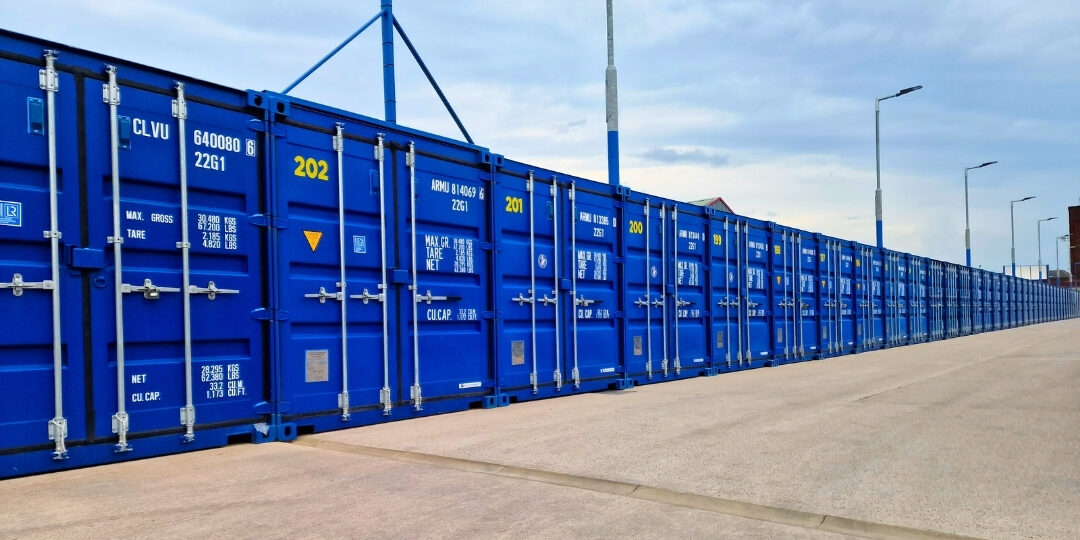
What you are paying for is not just square footage. Every unit, at every size, comes with 24 hour CCTV, 24 hour manned security, and ground floor access so you can drive straight up to your container to load and unload, rather than dragging boxes through a lift and a maze of corridors. That last point matters more to your actual cost than people realise, because time spent loading is time you are paying for either way, whether that is your own Saturday or a removals firm charging by the hour.
Storage unit sizes and what they actually fit
Getting the size wrong is the single most common way people overpay for storage. Rent a unit too big and you are paying for empty space every month. Rent one too small and you are paying for a second unit, or paying to move everything again once you realise. Here is what each size genuinely holds, not the rounded up version.
| Unit size | Approx. floor area | What it realistically fits | Best for |
|---|---|---|---|
| 5ft | Around 35 sq ft | Boxes, a single mattress, a few chairs, seasonal decorations, a small amount of stock | Students, single room declutter, small business overflow stock |
| 10ft | 75 sq ft | The contents of a 1 bedroom flat: wardrobe, bookshelves, washing machine, tables and boxed items | Flat move, single room renovation, tradesperson’s tool and stock storage |
| 20ft | 150 sq ft | The contents of a 3 bedroom house, or a 6 desk office clearance | Full house move, house renovation, small office relocation |
| 40ft | 300 sq ft | The contents of a 5 bedroom house including garage and shed items, or a 12 desk office | Large house move, whole property renovation, growing business stock |
A rough rule that holds up in practice: if you can picture the contents of a small garage, that is close to a 10ft unit. If you are picturing a double garage, that is closer to 20ft. If it is everything from a full house, garage and shed at once, you are into 40ft territory.
What actually changes the monthly price
Four things move the price up or down, and understanding them means you can control your own cost rather than just accepting the first quote.
- Unit size. This is the obvious one, and it scales roughly but not perfectly with square footage. Larger units are usually cheaper per square foot than the smallest sizes, because the fixed cost of the unit itself (the container, the door, the lock point) is spread over more space.
- Length of stay. Storage is typically billed monthly with no long lock in, which is exactly why it beats a commercial lease for most people. But committing to a longer stay, or paying a few months upfront, often gets you a better rate than rolling month to month. If you already know you need storage for six months during a renovation, ask about this upfront.
- Access and site features. Sites with 24 hour CCTV, manned security, forklift access and ground floor drive-up units cost more to run than a bare bones lock-up, and that shows up slightly in the price. It is worth paying for: a cheaper unit with no CCTV and no on-site staff is a false saving the moment something goes wrong.
- Insurance. Nearly all self storage providers require you to insure the contents of your unit, either through their own scheme or your own contents policy extended to cover storage. This is not usually included in the headline monthly rate, so always ask what it adds before comparing two quotes side by side.
Self storage cost by common life event
Real budgeting is easier with real scenarios, so here is what the size and cost picture looks like for the situations that bring most people to self storage in Bury and Failsworth.
- Moving house: most house moves need a 20ft unit for anywhere from 4 to 8 weeks, bridging the gap between completion dates or giving you breathing room to paint and fit out a new home before moving everything in at once.
- Home renovation: a kitchen or full house renovation typically needs a 10ft to 20ft unit depending on how much furniture has to come out. The stay is usually longer than a house move; 8 to 12 weeks is common once you allow for the reality that most renovations overrun.
- Downsizing or decluttering before a sale: a 10ft unit for 4 to 6 weeks is usually enough to clear a property back to show home condition before photographs and viewings.
- Business stock or equipment: a market trader might need a 5ft or 10ft unit for stock between weekends, while a growing ecommerce business storing pallets might need 20ft or 40ft. Business storage tends to be an ongoing cost rather than a fixed term one, so the monthly rate matters more than a short term discount.
Tradesperson tool and equipment storage: a 10ft unit is the most common choice, enough for a full set of power tools, stock materials and site equipment, secured overnight away from a van. We cover this in detail in our guide to self storage for tradesmen.
Is self storage worth the cost compared to the alternatives?
The honest answer depends what you are comparing it to, and it is worth being specific rather than assuming storage is automatically the cheap option.
- Versus a lock-up garage: often similar in price, but garages rarely have CCTV, manned security, or forklift assistance, and access hours are whatever the garage owner sets. If your garage is not attached to your own property, you are taking on the security risk without the security features.
- Versus keeping everything and getting a bigger house or van: extending a lease, buying a bigger van than you need, or renting a larger property just to fit belongings almost always costs more per month than a storage unit sized correctly for the overflow.
- Versus a skip or clearance company: if items genuinely have no future use, disposal is cheaper long term. But plenty of people pay for a skip in a panic during a move, then replace things six months later they wish they had kept. One month of storage usually costs far less than replacing something you were not sure about.
Versus commercial warehouse space, for businesses: covered in full in our guide to business storage versus warehouse rental. The short version: a small warehouse unit in Greater Manchester typically starts from several hundred pounds a month before business rates, utilities and a lease commitment, while self storage carries no business rates liability, no lease, and month-to-month flexibility. For most businesses under roughly 2,000 sq ft of storage need, self storage is the financially safer starting point.
How to get an accurate self storage quote
A quote is only useful if it compares like for like. Before you ask for one, work out roughly which size you need using the table above, decide roughly how long you expect to need it for, and ask directly whether insurance, access and security are included in the headline price or added on top. Meadow Self Storage quotes both branches directly: call 0161 682 6822 and select Option 1 for the Failsworth, Manchester branch or Option 2 for the Bury branch, or use the online quote form for either site.
Self Storage Cost FAQ
1. Is self storage cheaper in Bury than in Manchester city centre?
Generally yes. Storage pricing follows the same pattern as commercial property broadly: sites closer to a city centre carry higher overheads, and that shows up in the monthly rate. Bury and Failsworth sit outside the highest cost zone while still being a short drive from central Manchester.
2. Do I have to sign a long contract for self storage?
No. Self storage is designed around flexibility, typically billed month to month with no lock in beyond your notice period, unlike a commercial lease that usually ties a business in for a year or more.
3. Is insurance included in the price of a storage unit?
Not usually as standard. Most facilities require contents insurance, either through their own scheme or a policy you already hold extended to cover storage. Always ask what this adds to the headline rate before comparing two quotes.
4. What size storage unit do I need for a 3 bedroom house?
A 20ft unit is the typical fit for a 3 bedroom house, covering furniture, white goods and boxed belongings. If the property also has a full garage or shed to clear, a 40ft unit may suit better.
5. Can I get a smaller, cheaper storage unit than 10ft?
Yes. Meadow Self Storage offers 5ft units, which suit a single room’s worth of boxes, small furniture, or business overflow stock, at a lower monthly cost than a 10ft unit.
6. Does self storage cost more in winter or summer?
Demand for storage tends to rise during peak moving season in spring and summer, which can affect availability more than price. If your move date is flexible, booking outside the busiest months makes it easier to secure the exact size you want.
7. Is it cheaper to pay for self storage monthly or upfront?
It depends on the provider, but many facilities offer a better rate for customers who commit to a longer minimum stay or pay several months in advance. Always ask directly rather than assuming the standard monthly rate is the only option.
8. What is included in the price at Meadow Self Storage?
Every unit, from 5ft to 40ft, includes 24 hour CCTV, 24 hour manned security, and ground floor drive-up access at both the Bury and Failsworth, Manchester branches.